
Physically Based Procedural LED Wall
2025.10 -
Procedurally generating digital twins for LED walls with physically based lighting
Unreal Engine, HLSL
LED walls is a core instrument for displaying digital media to large audiences, and is also integral to ICFVX (virtual production) workflows. Therefore, it is not surprising that they’ve also appearing in virtual worlds, from fully CG content to AR/MR live events and virtual production scouting/stage setup.
However, when researching current implementations and solutions for virtual LED screens, I recognized two challenges:
Recreating a 1:1-sized LED wall configuration based on real-world parameters is not straightforward. LED walls are often configured with a slight angle between panels to create a curved wall, making manual calculation and setup of an accurate mesh difficult. Additionally, a new mesh needs to be reimported every time a different configuration is required.
Many implementations of the emissive LED surface did not use physically accurate lighting values. Without correct light emission, it will be challenging to achieve the unique lighting effects provided by colorful LED walls. A physically accurate setup is also crucial for integrating LED walls into a physically based lighting workflow for immersive lighting.
In this project, I leveraged Unreal Engine 5’s new Geometry Scripting functionality to develop a system that procedurally generates LED wall meshes based on real-world parameters, and also automatically calculates correct UVs for undistorted image display. Additionally, a material is created using HLSL to simulate modern SMD LED panels, emitting light similar to an actual LED wall. This setup accelerates scene building with various LED walls and utilizes Unreal Engine’s real-time global illumination system to deliver visually appealing results.
Feature Demo

Physically Based Lighting Behavior w/ Lumen
Part 1: Procedurally Generated Mesh
The mesh is constructed using real-world parameters such as LED panel size, panel count, and the curve angle. This allows artists and directors to quickly create digital twins of LED walls using familiar values. Thanks to the Geometry Scripting function, the mesh can be instantly updated with realistic faceted planes and properly fitted UV mapping.
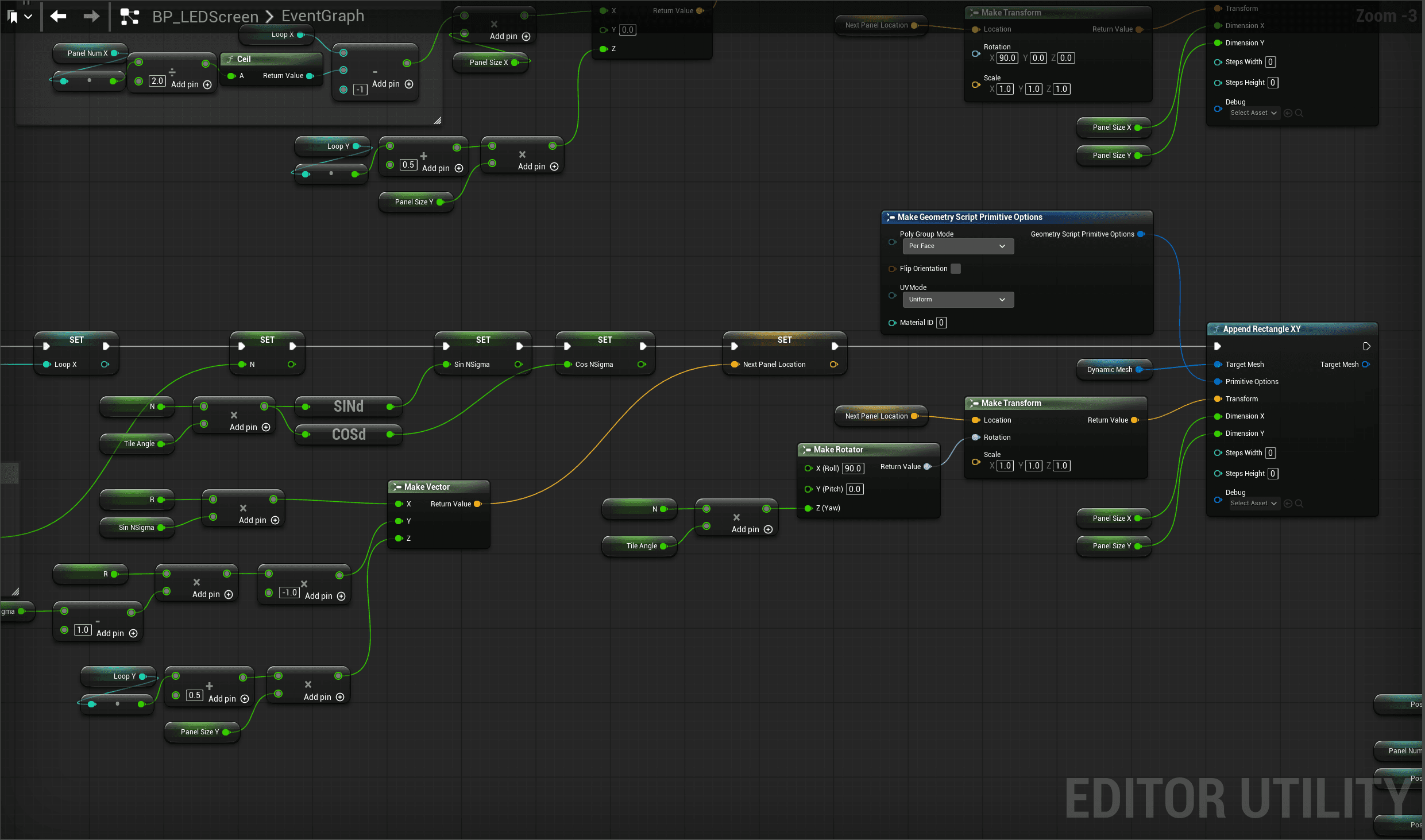
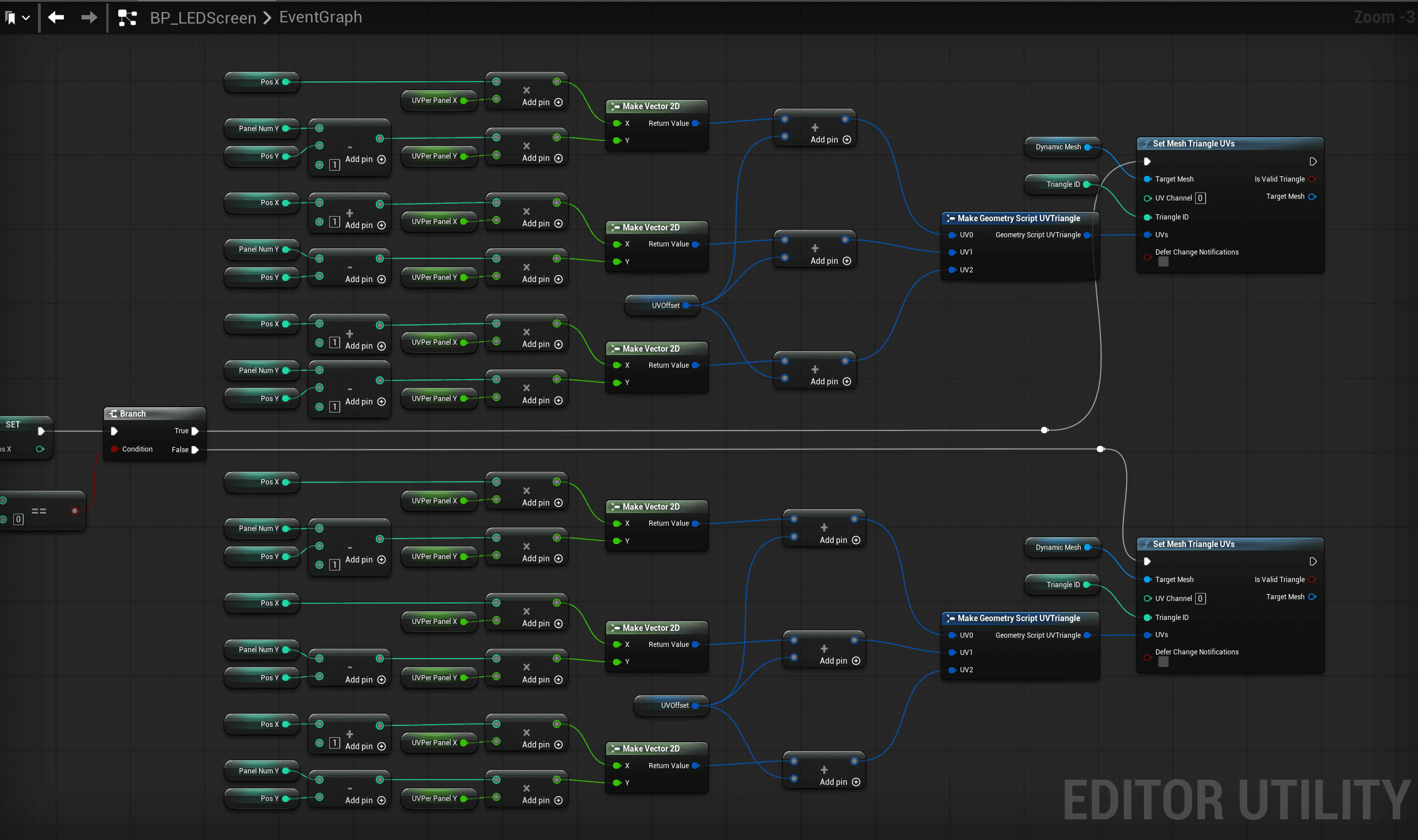
Blueprint setup for procedural mesh generation and UV calculation
Mesh Regeneration and UV Recalculation
Virtual Production Application
This mesh can also be used to set up nDisplay configurations for virtual production setups, reducing the need for external tools to generate the mesh and manually import it into Unreal Engine.
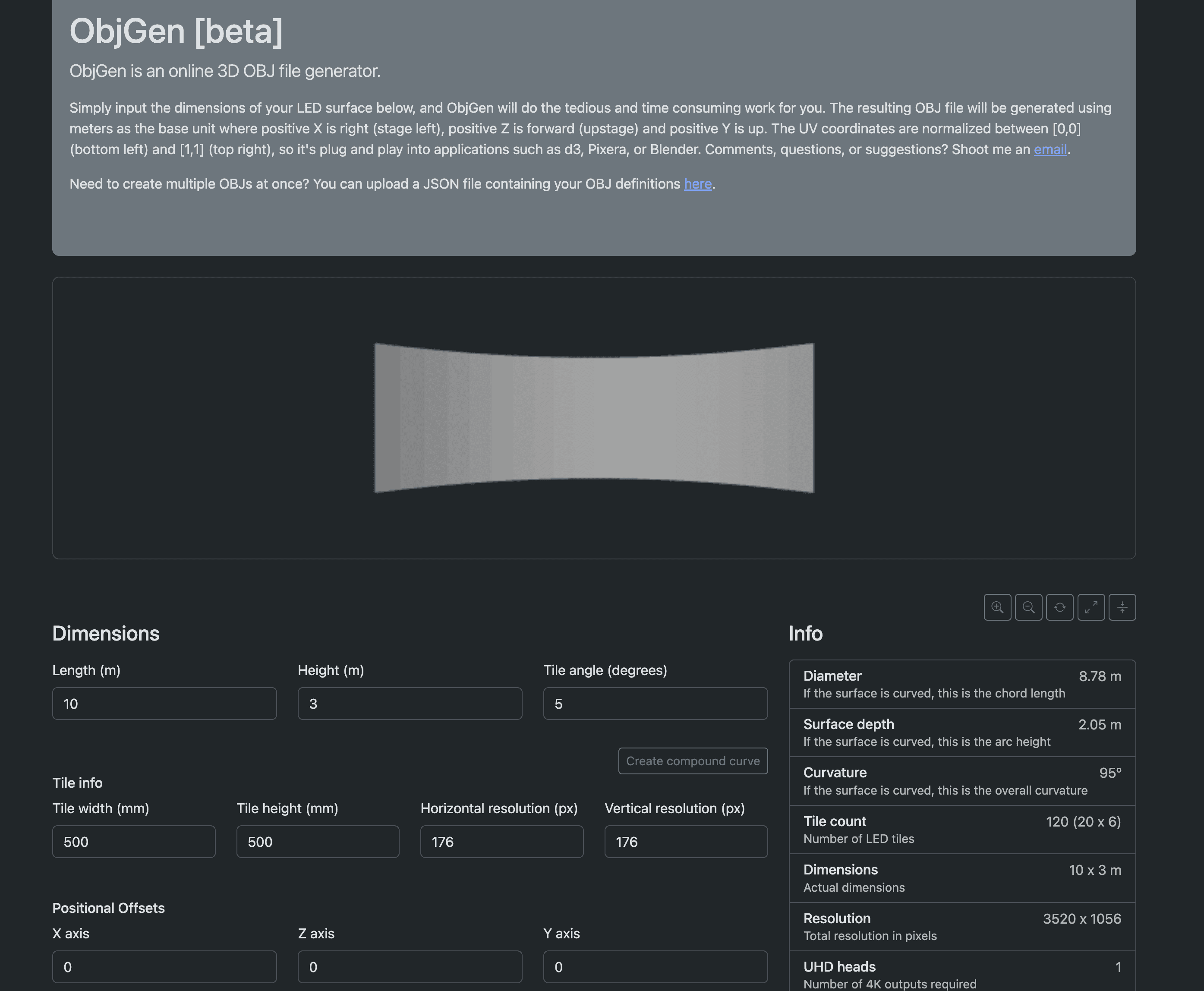
ObjGen by Marcus Bengtsson, an online tool commonly used to generate physically correct LED wall meshes.
Part 2: Emissive LED Surface
Many Unreal Engine implementations of LED walls mimic the DIP-type panels, where RGB-colored diodes are visible separately. However, in recent years, more advanced SMD panels have become more prevalent, especially for indoor events requiring smaller pixel pitch. Therefore, my implementation recreates the circular or rounded square-shaped uniform diodes for the surface procedurally using custom HLSL codes, which can also be configured using actual values like panel resolution and diode size.
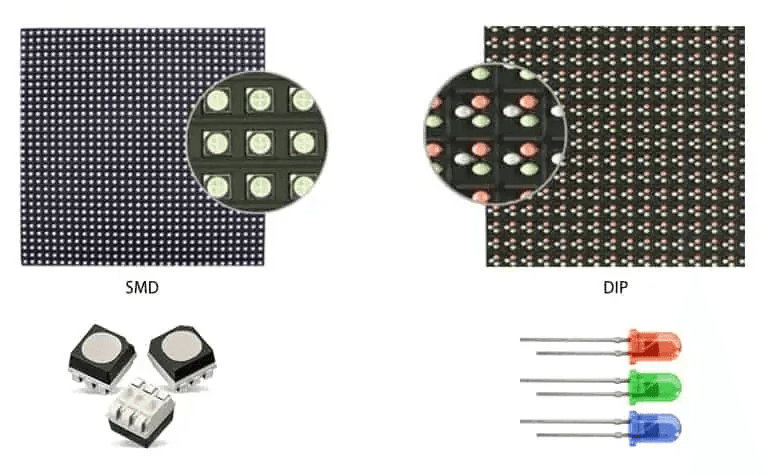
SMD and DIP LED panels. Source: Onedisplay
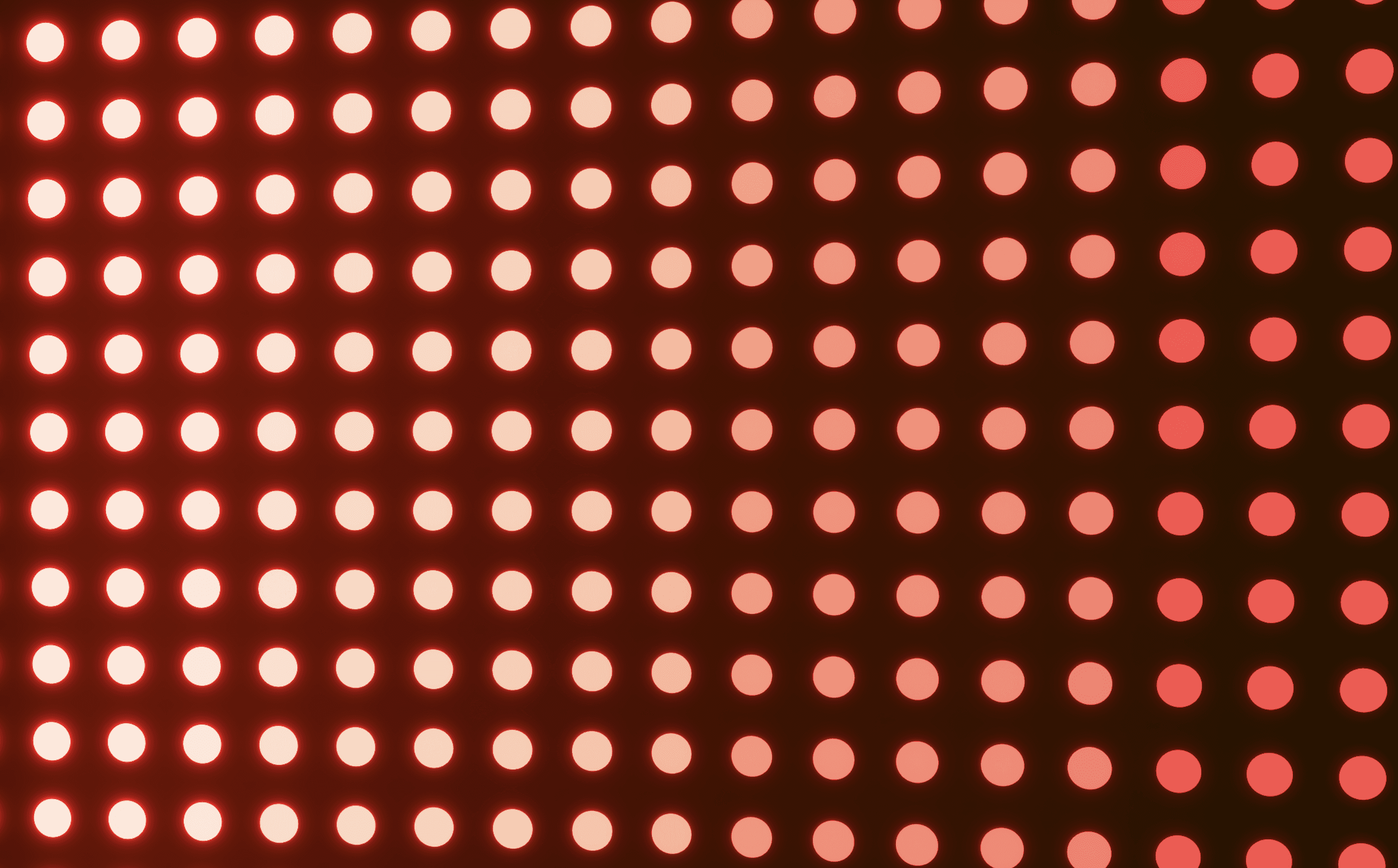
Emissive LED diodes created with HLSL
Material Setup with HLSL
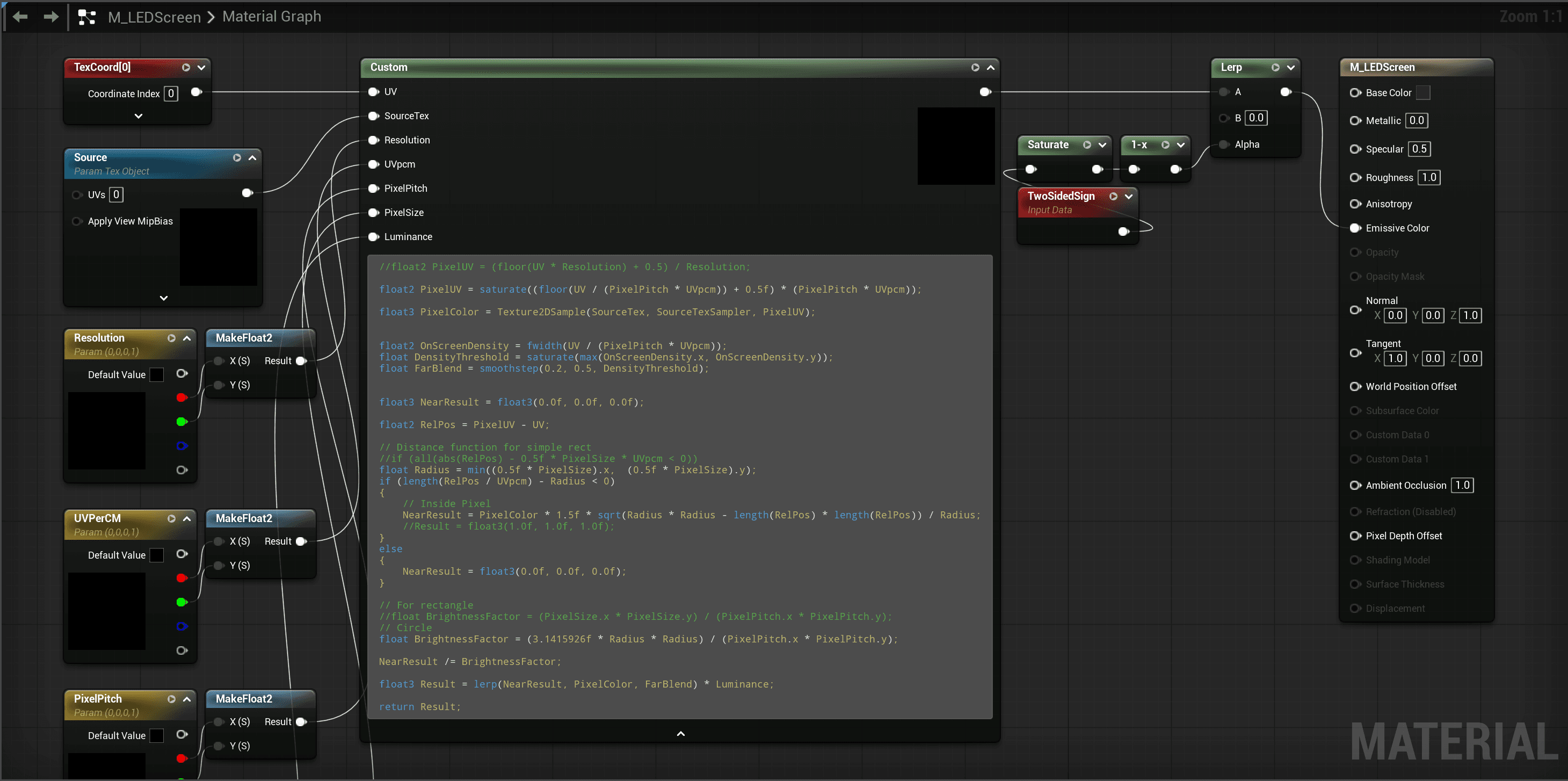
Part 2: Emissive LED Surface
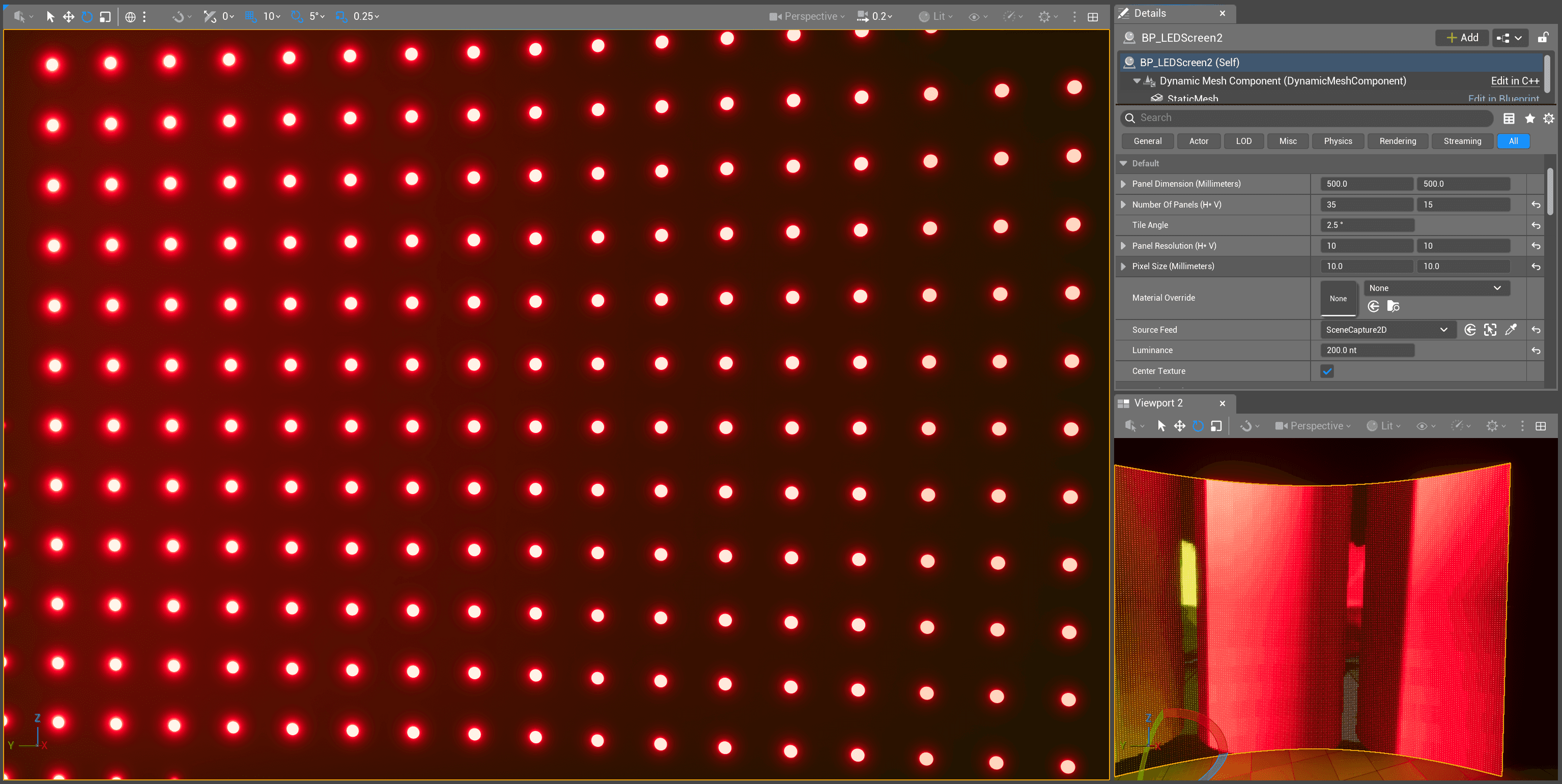
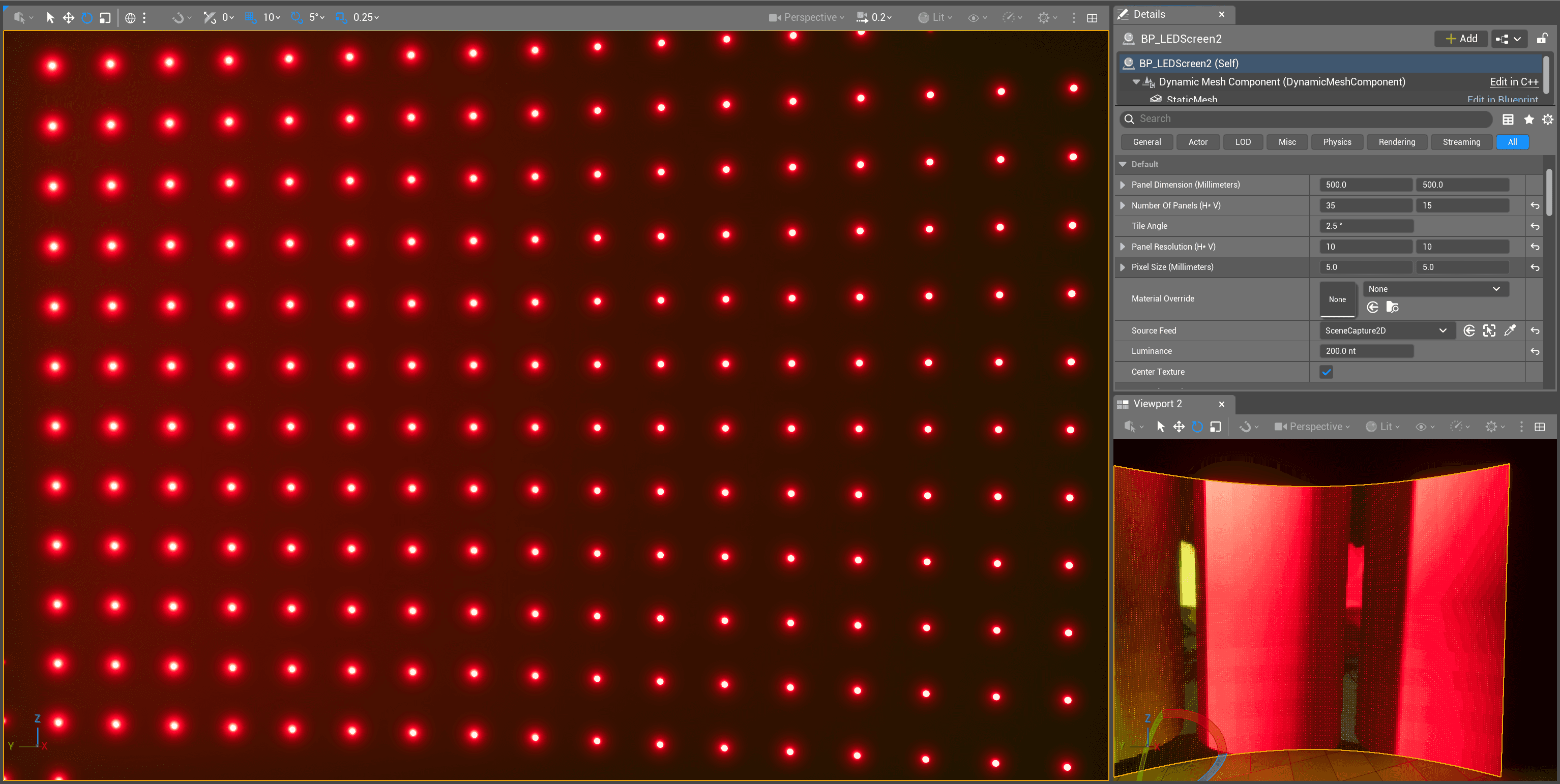
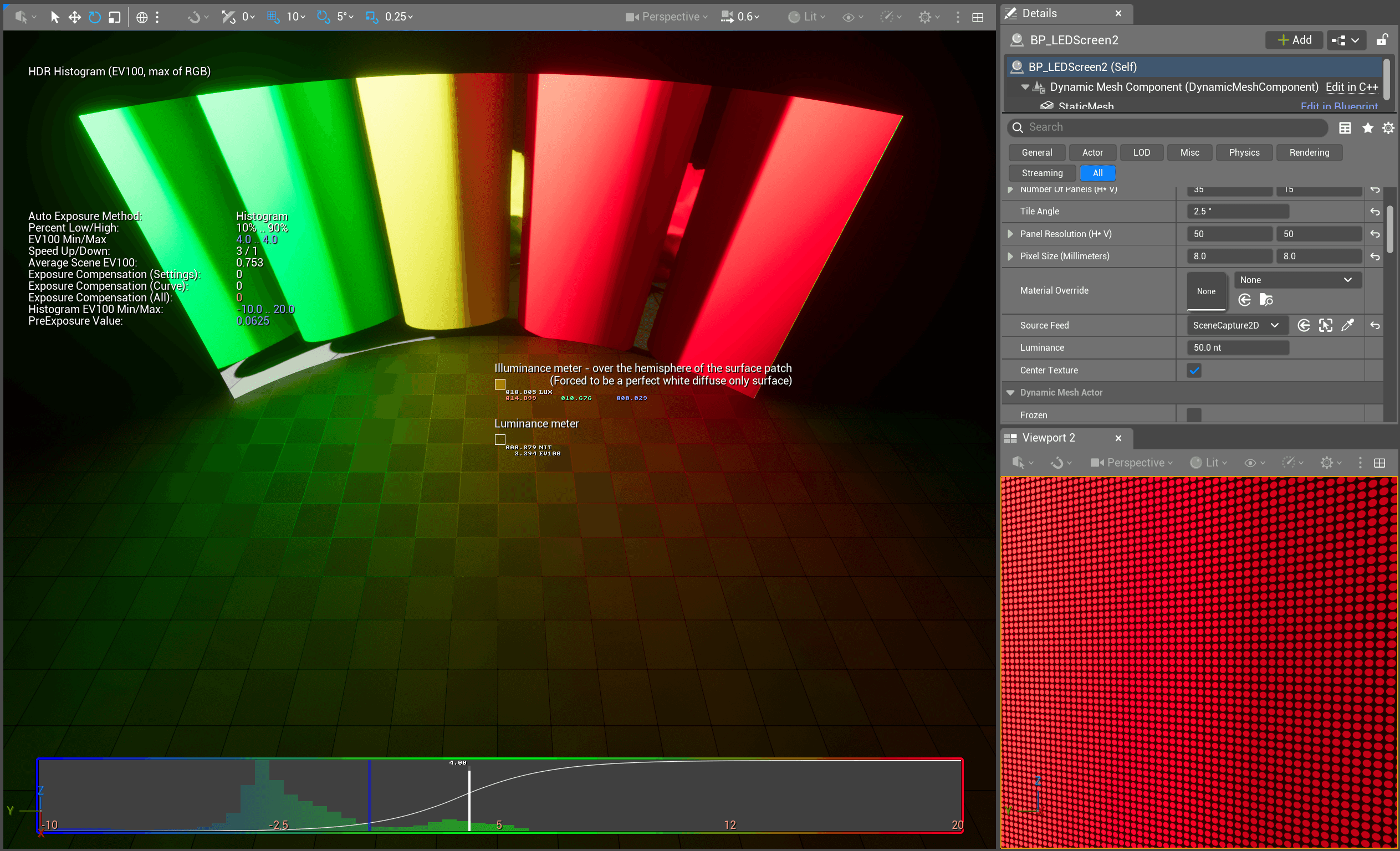
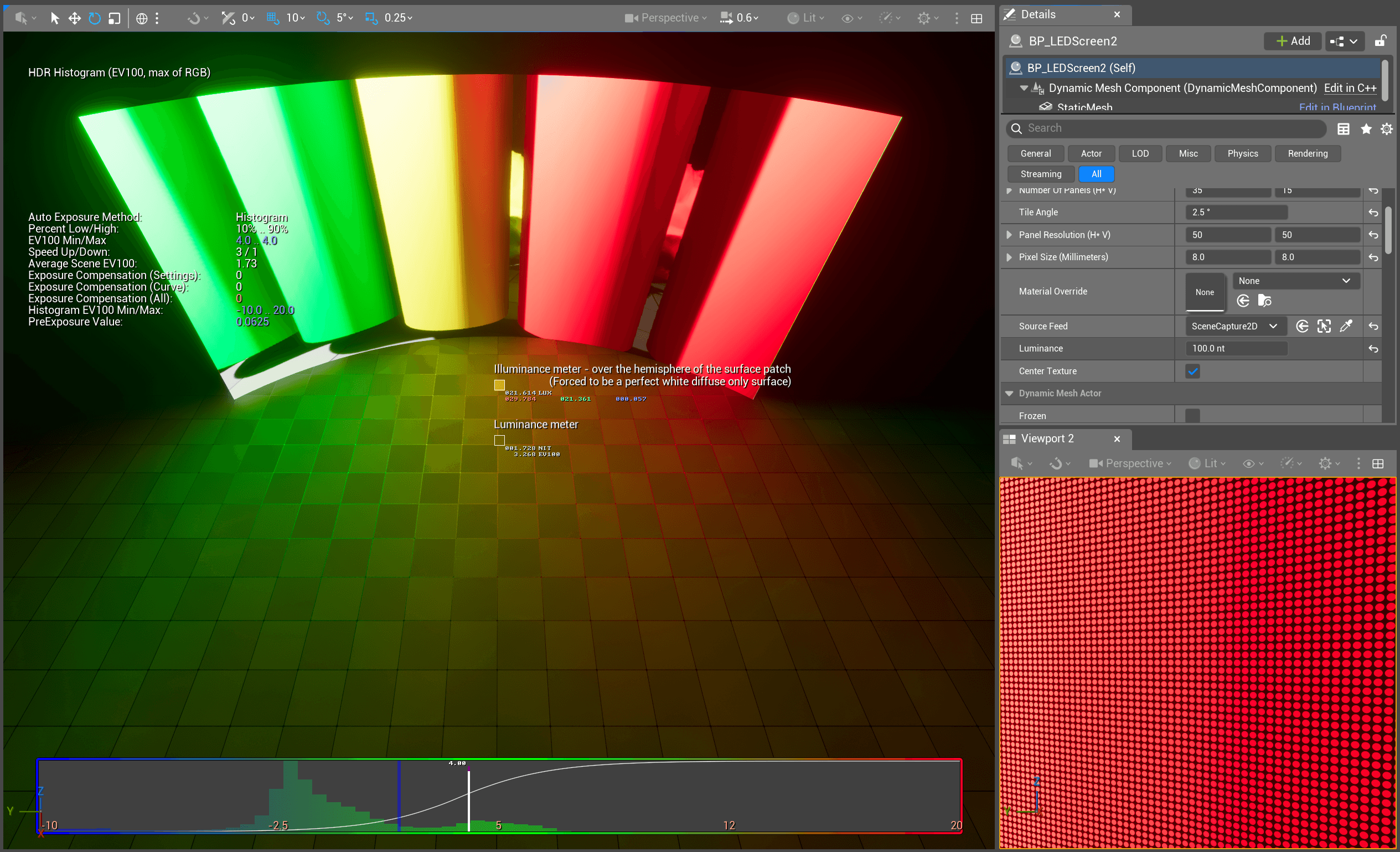
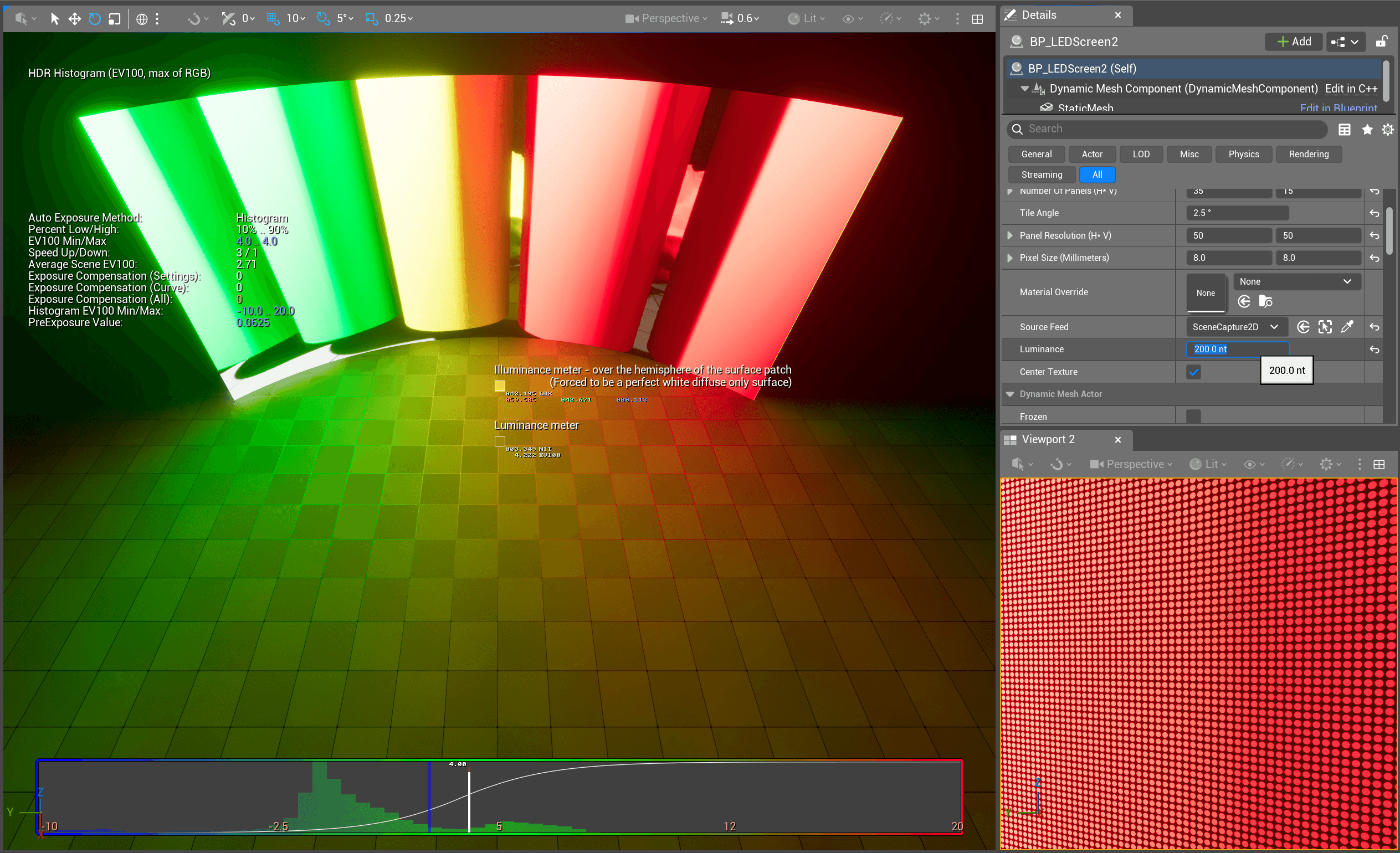
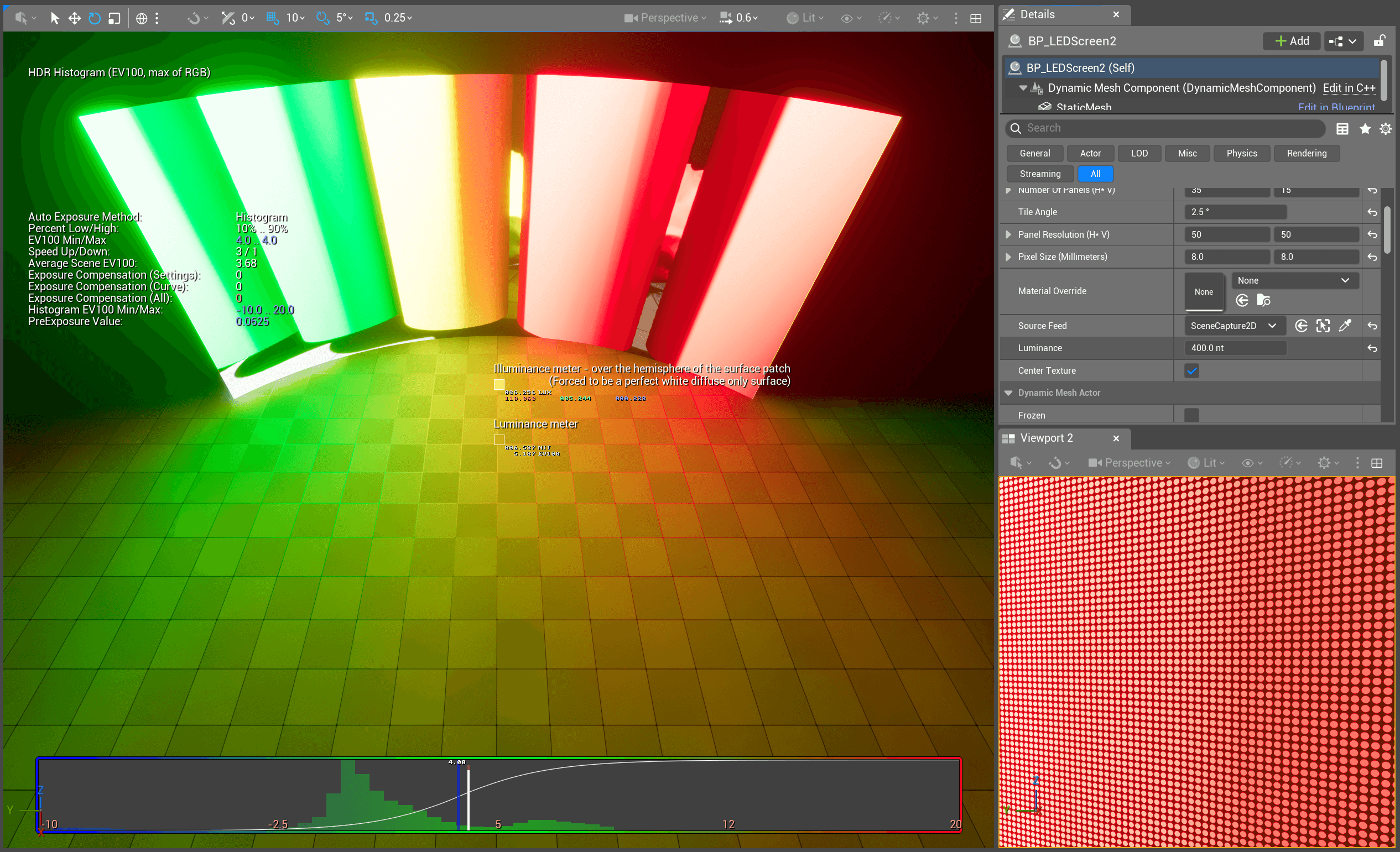
The next challenge is accurately simulating the lighting behavior of the wall. In real-life LED walls, the output brightness is typically specified and controlled by luminance value (measured in nits). To convert the final surface luminance to the emissive value of the diodes, the pixel pitch and pixel shape are taken into consideration in the calculation in HLSL to ensure consistent output regardless of panel specifications.
Brightness Adaptation Based on Diode Size
Pixel emits more light as individual pixel gets smaller to maintain same luminance value for the entire panel.
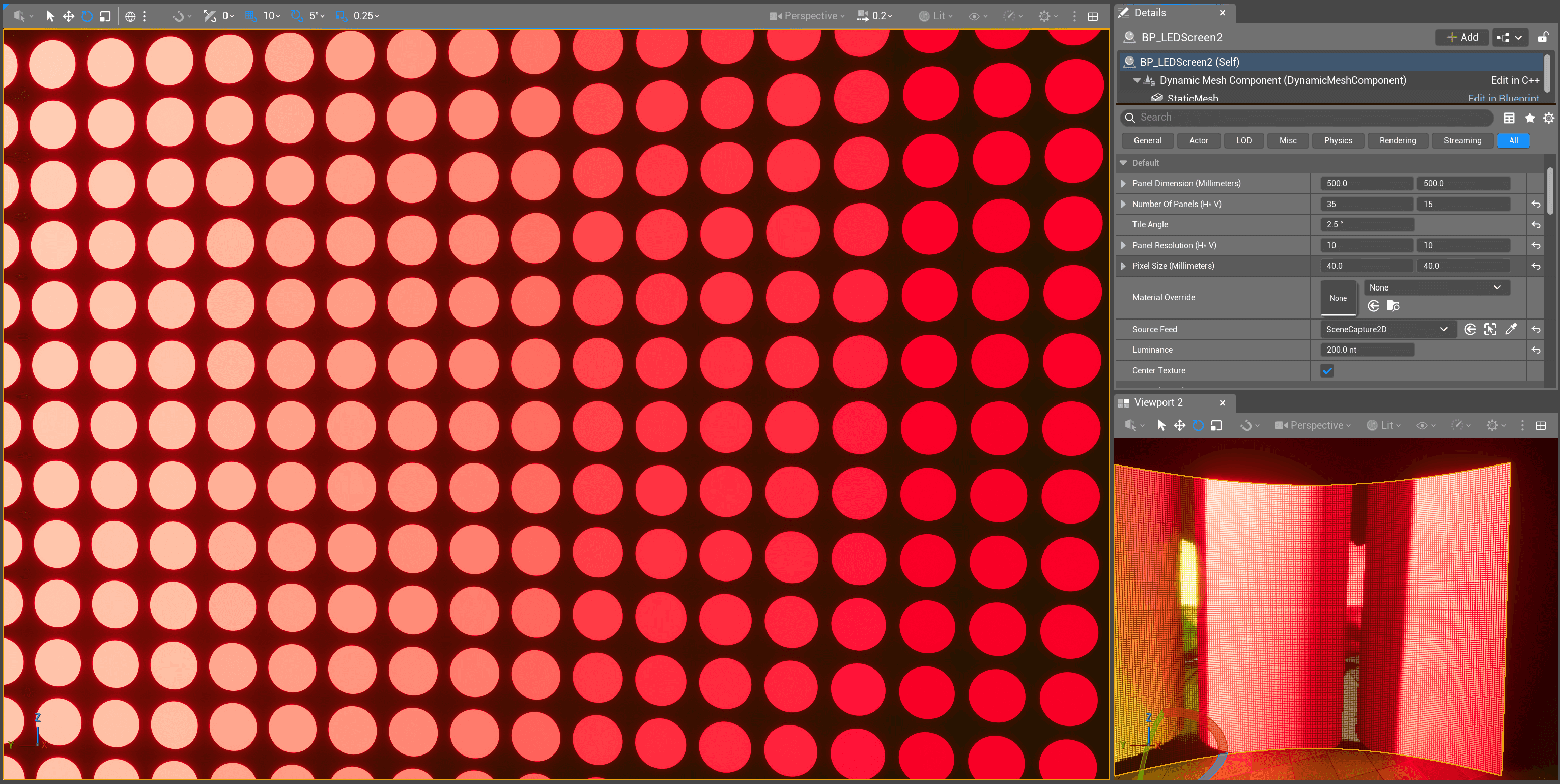
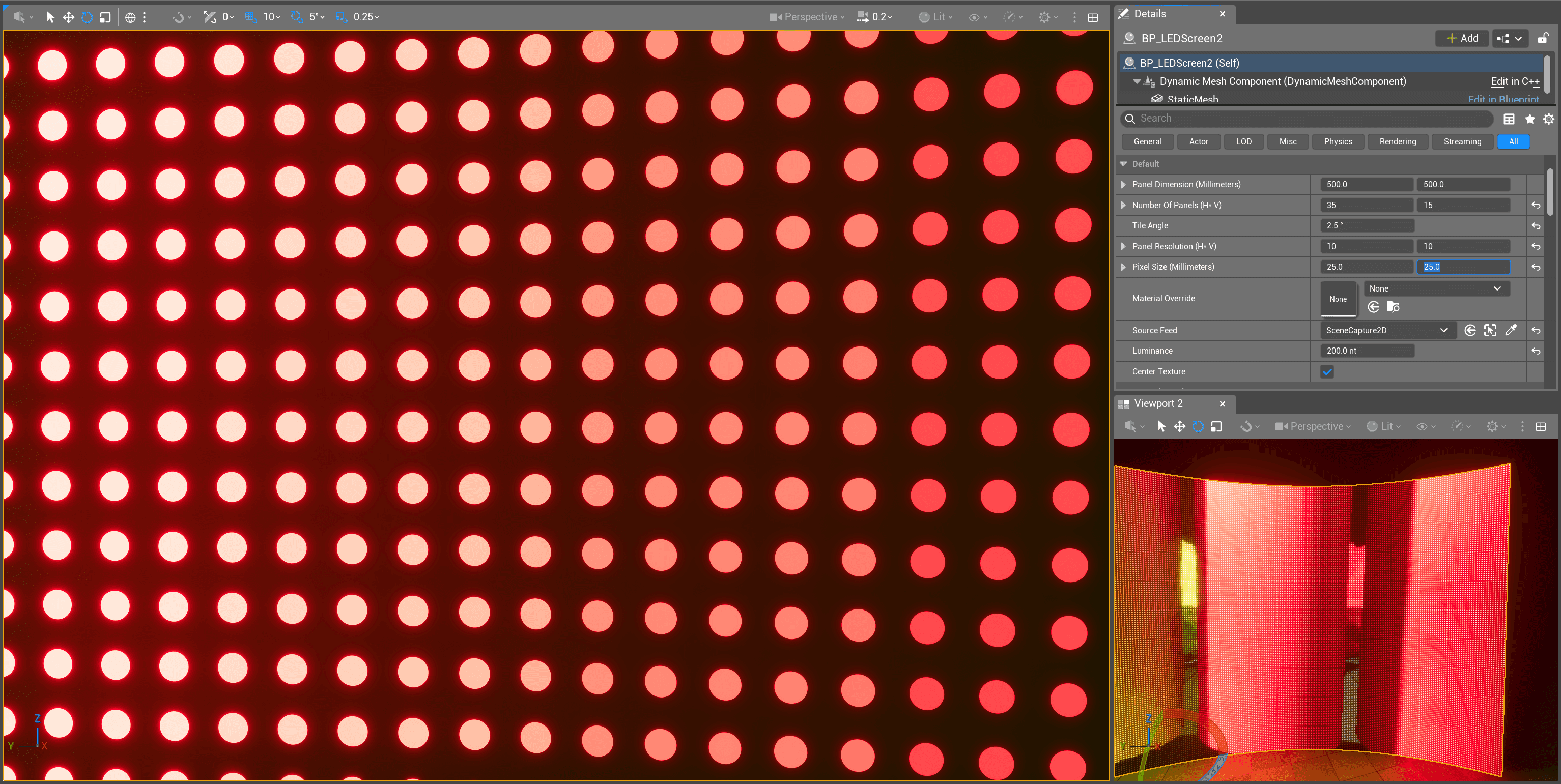
Accurate Brightness Control for Global Illumination
Enlin Li
© 2023-2026. All Rights Reserved.
Kanagawa, Japan